

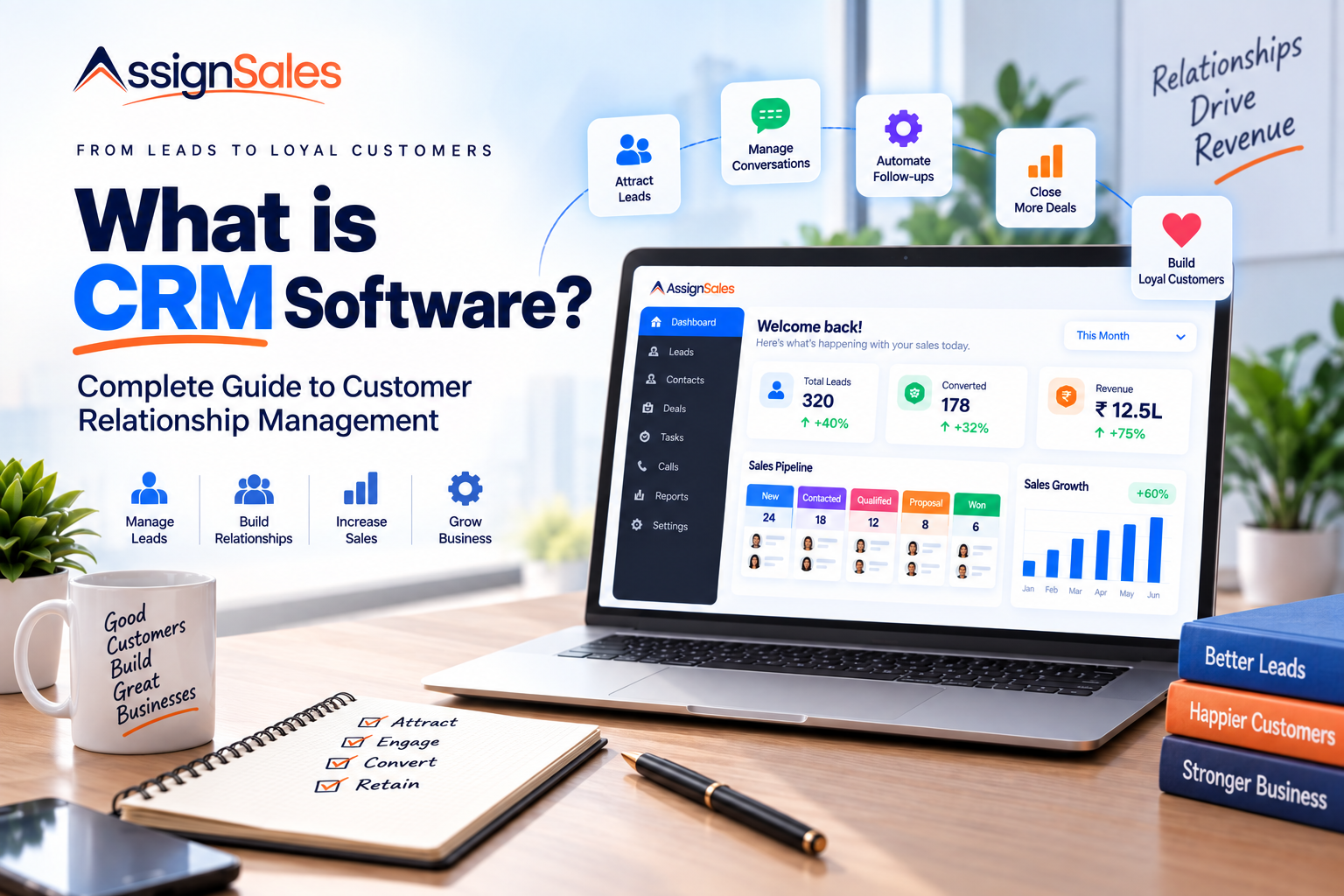
CRM software (Customer Relationship Management software) helps businesses manage leads, customers, sales activities, communication, follow-ups and customer relationships from one centralized platform. It is both a business strategy and technology used to manage interactions with current and potential customers throughout the customer lifecycle.
As businesses grow, customer information can become scattered across spreadsheets, emails, phone calls and messaging apps. A CRM brings this information together, helping teams manage leads, automate sales, improve customer engagement and increase productivity.
Why Do Businesses Need CRM Software?
A modern CRM helps businesses:
- Capture and organize leads
- Manage contacts and organizations
- Track sales opportunities and deals
- Automate tasks and follow-ups
- Manage customer conversations
- Monitor sales pipelines
- Improve team productivity
- Analyze sales performance
- Build stronger customer relationships
Key Features of CRM Software
Lead Management
Contact & Customer Management
Sales Pipeline Management
Sales Automation
Omni-Channel Communication
CRM Analytics
CRM Integrations
Benefits of CRM Software
A well-implemented CRM can help businesses achieve:
- Better Lead Management
- Faster Follow-Ups
- Higher Sales Productivity
- Improved Customer Experience
- Better Sales Visibility
- Business Growth
CRM is useful for startups, MSMEs, small businesses, growing companies and enterprises across industries.
How AssignSales Helps
AssignSales is an omni-channel CRM software designed to help businesses manage the complete customer and sales lifecycle.
With AssignSales, businesses can:
- Capture and manage leads
- Manage contacts and organizations
- Track deals and sales pipelines
- Automate tasks and follow-ups
- Manage customer activities
- Connect communication channels
- Monitor sales analytics
- Integrate existing business tools
- Customize CRM workflows for their business
Conclusion: CRM Is a Growth Engine for Modern Businesses
In today's competitive market, CRM software is more than a customer database. It is a sales, customer management, automation and business intelligence platform that helps organizations build stronger customer relationships and improve revenue performance.
From lead generation and sales follow-ups to customer communication, analytics and revenue forecasting , CRM helps businesses create a structured and measurable growth process.
CRM is not just software for managing customers — it is infrastructure for managing and accelerating business growth.